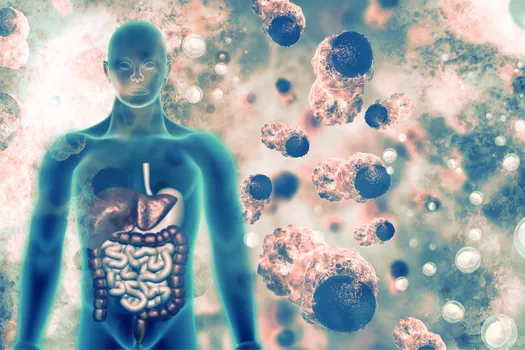
Here’s what coronavirus does to the body
From blood storms to honeycomb lungs, here’s an organ-by-organ look at how COVID-19 harms humans.
Much remains unknown about
the novel coronavirus ripping through China, but one thing is certain.
The disease can cast a storm over the whole human body.
Such has been the nature of past zoonotic coronaviruses, ones that
hopped from animals to humans like SARS and MERS. Unlike their
common-cold-causing cousins, these emergent coronaviruses can spark a
viral-induced fire throughout many of a person’s organs, and the new
disease—dubbed "COVID-19" by the World Health Organization—is no
exception when it is severe.
That helps explain why the COVID-19 epidemic has killed more than 1,800 people, surpassing the SARS death toll in a matter of weeks. While the death rate for COVID-19 appears to be a fifth of SARS, the novel coronavirus has spread faster.
That helps explain why the COVID-19 epidemic has killed more than 1,800 people, surpassing the SARS death toll in a matter of weeks. While the death rate for COVID-19 appears to be a fifth of SARS, the novel coronavirus has spread faster.
Confirmed cases rose
to more than 60,000 last Thursday, nearly a 50 percent jump relative to
the prior day, and the tally has since increased by another 13,000.
This leap reflects a change in the way Chinese authorities are
diagnosing infections instead of a massive shift in the scope of the
outbreak. Rather than wait for patients to test positive for the virus,
diagnoses now include
anyone whose chest scan reveals COVID-19’s distinctive pattern of
pneumonia. This method will hopefully allow authorities to isolate and
treat patients more quickly.
If this outbreak continues to spread, there’s no telling how harmful it could become. A leading epidemiologist at the University of Hong Kong warned this week that COVID-19 could infect 60 percent of the globe if left unchecked.
On Monday, the Chinese Center for Disease Control and Prevention released clinical details on the first 72,314 patients diagnosed through February 11. The report shows that COVID-19 killed 2.3 percent of patients, meaning it is currently 23 times more fatal than the seasonal flu. Severe disease and deaths were reported in every age group, except kids under nine years old.
On Monday, the Chinese Center for Disease Control and Prevention released clinical details on the first 72,314 patients diagnosed through February 11. The report shows that COVID-19 killed 2.3 percent of patients, meaning it is currently 23 times more fatal than the seasonal flu. Severe disease and deaths were reported in every age group, except kids under nine years old.
Meanwhile, countries have been scrambling to evacuate their citizens
from a cruise ship that’s been quarantined off the coast of Japan. The
Japanese health ministry announced Tuesday
that an additional 88 passengers on the ship were diagnosed with
COVID-19—bringing the total to 542. Of the more than 300 Americans who have been repatriated from the ship, 14 have tested positive for the coronavirus.
But what actually happens to your body when it is infected by the coronavirus? The new strain is so genetically similar to SARS that it has inherited the title SARS-CoV-2. So combining early research on the new outbreak with past lessons from SARS and MERS can provide an answer.
But what actually happens to your body when it is infected by the coronavirus? The new strain is so genetically similar to SARS that it has inherited the title SARS-CoV-2. So combining early research on the new outbreak with past lessons from SARS and MERS can provide an answer.
The Lungs: Ground zero
For most patients, COVID-19 begins and ends in their lungs, because like the flu, coronaviruses are respiratory diseases.
They spread typically when an infected person coughs or sneezes,
spraying droplets that can transmit the virus to anyone in close
contact. Coronaviruses also cause flu-like symptoms: Patients might
start out with a fever and cough that progresses to pneumonia or worse. (Find out how coronavirus spreads on a plane—and the safest place to sit).
After the SARS outbreak, the World Health Organization reported
that the disease typically attacked the lungs in three phases: viral
replication, immune hyper-reactivity, and pulmonary destruction.
Not all patients went through all three phases—in fact only 25 percent of SARS patients suffered respiratory failure, the defining signature of severe cases. Likewise, COVID-19, according to early data, causes milder symptoms in about 82 percent of cases, while the remainder are severe or critical.
Not all patients went through all three phases—in fact only 25 percent of SARS patients suffered respiratory failure, the defining signature of severe cases. Likewise, COVID-19, according to early data, causes milder symptoms in about 82 percent of cases, while the remainder are severe or critical.
Look deeper, and the novel coronavirus appears to follow other
patterns of SARS, says University of Maryland School of Medicine
associate professor Matthew B. Frieman, who studies highly pathogenic coronaviruses.
In the early days of an infection, the novel coronavirus rapidly
invades human lung cells. Those lung cells come in two classes: ones
that make mucus and ones with hair-like batons called cilia.
Mucus, though gross when outside the body, helps protect lung tissue from pathogens and make sure your breathing organ doesn’t dry out. The cilia cells beat around the mucus, clearing out debris like pollen or viruses.
Mucus, though gross when outside the body, helps protect lung tissue from pathogens and make sure your breathing organ doesn’t dry out. The cilia cells beat around the mucus, clearing out debris like pollen or viruses.
Frieman explains that SARS loved to infect and kill cilia cells,
which then sloughed off and filled patients’ airways with debris and
fluids, and he hypothesizes that the same is happening with the novel
coronavirus. That’s because the earliest studies on COVID-19 have shown that many patients develop pneumonia in both lungs, accompanied by symptoms like shortness of breath.
That’s when phase two and the immune system kicks in. Aroused by the
presence of a viral invader, our bodies step up to fight the disease by
flooding the lungs with immune cells to clear away the damage and repair
the lung tissue.
When working properly, this inflammatory process is tightly regulated
and confined only to infected areas. But sometimes your immune system
goes haywire and those cells kill anything in their way, including your
healthy tissue.
“So you get more damage instead of less from the immune response,”
Frieman says. Even more debris clogs up the lungs, and pneumonia
worsens. (Find out how the novel coronavirus compares to flu, Ebola, and other major outbreaks).
During the third phase, lung damage continues to build—which can
result in respiratory failure. Even if death doesn’t occur, some
patients survive with permanent lung damage. According to the WHO,
SARS punched holes in the lungs, giving them “a honeycomb-like
appearance”—and these lesions are present in those afflicted by novel coronavirus, too.
This is a modal window.
up next in 5

These holes are likely created by the immune system’s hyperactive
response, which creates scars that both protect and stiffen the lungs.
When that occurs, patients often have to be put on ventilators to
assist their breathing. Meanwhile, inflammation also makes the membranes
between the air sacs and blood vessels more permeable, which can fill
the lungs with fluid and affect their ability to oxygenate blood.
“In severe cases, you basically flood your lungs and you can’t breathe,” Frieman says. “That’s how people are dying.”
The Stomach: A shared gateway
During the SARS and MERS outbreaks, nearly a quarter
of patients had diarrhea—a much more significant feature of those
zoonotic coronaviruses. But Frieman says it’s still not clear whether
gastrointestinal symptoms play a major part in the latest outbreak,
given cases diarrhea and abdominal pain have been rare. But why does a
respiratory virus bother the gut at all?
When any virus enters your body, it looks for human cells with its
favorite doorways—proteins on the outside of the cells called receptors.
If the virus finds a compatible receptor on a cell, it can invade.
Some viruses are picky about which door they choose, but others are a
little more promiscuous. “They can very easily penetrate into all types
of cells,” says Anna Suk-Fong Lok, assistant dean for clinical research
at the University of Michigan Medical School and former president of
the American Association for the Study of Liver Diseases.
What is a Virus?
Scientists
at USAMRID, the U.S. Army Medical Research Institute of Infectious
diseases, work with some of the most deadly forms of life on earth,
killer viruses. Learn more.
Both SARS and MERS
viruses can access the cells that line your intestines and large and
small colon, and those infections appear to flourish in the gut,
potentially causing the damage or the leakage of fluid that becomes
diarrhea.
But Frieman says we don’t know yet if the novel coronavirus does the same. Researchers believe COVID-19 uses the same receptor as SARS, and this doorway can be found in your lungs and small intestines.
Two studies—one in the New England Journal of Medicine and one preprint in medRxiv involving 1,099 cases—have
also detected the virus in stool samples, which might indicate the
virus could spread via feces. But this is far from conclusive.
“Whether that kind of fecal transmission is occuring for this Wuhan
virus, we don’t know at all,” Frieman says. “But it definitely looks
like it’s there in the stool and it looks like people do have GI
symptoms associated with this.”
Blood storm
Coronaviruses can also cause problems in other systems of the body, due to the hyperactive immune response we mentioned earlier.
A 2014 study
showed that 92 percent of patients with MERS had at least one
manifestation of the coronavirus outside of the lungs. In fact, signs of
a full body blitz have been witnessed with all three of the zoonotic
coronaviruses: elevated liver enzymes, lower white blood cell and
platelet count, and low blood pressure. In rare cases, patients have
suffered from acute kidney injury and cardiac arrest.
But this isn’t necessarily a sign that the virus itself is spreading
throughout the body, says Angela Rasmussen, a virologist and associate
research scientist at Columbia University Mailman School of Public
Health. It might be a cytokine storm.
Cytokines are proteins used by the immune system as alarm
beacons—they recruit immune cells to the site of infection. The immune
cells then kill off the infected tissue in a bid to save the rest of the
body.
Basically you’re bleeding out of your blood vessels.
Humans rely on our immune systems to keep their cool when facing a
threat. But during a runaway coronavirus infection, when the immune
system dumps cytokines into the lungs without any regulation, this
culling becomes a free-for-all, Rasmussen says “Instead of shooting at a
target with a gun, you’re using a missile launcher,” she says. That’s
where the problem arises: Your body is not just targeting the infected
cells. It is attacking healthy tissue too.
The implications extend outside the lungs. Cytokine storms create
inflammation that weakens blood vessels in the lungs and causes fluid to
seep through to the air sacs. “Basically you’re bleeding out of your
blood vessels,” Rasmussen says. The storm spills into your circulatory system and creates systemic issues across multiple organs.
From there, things can take a sharp turn for the worse. In some of
the most severe COVID-19 cases, the cytokine response—combined with a
diminished capacity to pump oxygen to the rest of the body—can result
in multi-organ failure. Scientists don’t know exactly why some patients
experience complications outside of the lung, but it might be linked to
underlying conditions like heart disease or diabetes.
“Even if the virus doesn’t get to kidneys and liver and spleen and
other things, it can have clear downstream effects on all of those
processes,” Frieman says. And that’s when things can get serious.
Liver: Collateral damage
When a zoonotic coronavirus spreads from the respiratory system, your
liver is often one downstream organ that suffers. Doctors have seen
indications of liver injury with SARS, MERS, and COVID-19—often mild,
though more severe cases have led to severe liver damage and even liver failure. So what’s happening?
“Once a virus gets into your bloodstream, they can swim to any part
of your body,” Lok says. “The liver is a very vascular organ so [a
coronavirus] can very easily get into your liver.”
Your liver works pretty hard to make sure your body can function
properly. Its main job is to process your blood after it leaves the
stomach, filtering out the toxins and creating nutrients your body can
use. It also makes the bile that helps your small intestine break down
fats. Your liver also contains enzymes, which speed up chemical reactions in the body.
In a normal body, Lok explains, liver cells are constantly dying off
and releasing enzymes into your bloodstream. This resourceful organ then
quickly regenerates new cells and carries on with its day. Because of
that regeneration process, the liver can withstand a lot of injury.
When you have abnormally high levels of enzymes in your blood,
though—as has been a common characteristic of patients suffering from SARS and MERS—it’s
a warning sign. It might be a mild injury that the liver will quickly
bounce back from or it could be something more severe—even liver
failure.
Lok says scientists don’t completely understand how these respiratory
viruses behave in the liver. The virus might be directly infecting the
liver, replicating and killing off the cells itself. Or those cells
might be collateral damage as your body’s immune response to the virus
sets off a severe inflammatory reaction in the liver.
Either way, she notes that liver failure was never the sole cause of
death for SARS patients. “By the time the liver fails,” she says,
“oftentimes you’ll find that the patient not only has lung problems and
liver problems but they may also have kidney problems. By then it
becomes a systemic infection.”
Kidney: It’s all connected
Yes, your kidneys are caught up in this mess, too. Six percent of SARS patients—and a full quarter of MERS patients—suffered acute renal injury. Studies have shown
the novel coronavirus can do the same. It may be a relatively uncommon
feature of the disease, but it is a fatal one. Ultimately 91.7 percent
of SARS patients with acute renal impairment died, according to a 2005 study in Kidney International.
Like the liver, your kidneys act as a filter your blood. Each kidney
is filled with about 800,000 of microscopic distilling units called
nephrons. These nephrons have two main components: a filter to clean the
blood and a little tubes that return the good stuff back to your body
or send the waste down to your bladder as urine.
It’s the kidney tubules that seem to be most affected by these zoonotic coronaviruses. After the SARS outbreak, the WHO reported that the virus was found in kidney tubules, which can become inflamed.
It’s not uncommon to detect a virus in the tubules if it’s in your
bloodstream, says Kar Neng Lai, a professor emeritus at the University
of Hong Kong and consultant nephrologist at Hong Kong Sanatorium and
Hospital. As your kidneys are continuously filtering blood, sometimes
the tubular cells can trap the virus and cause a transient, or milder,
injury.
That injury could become lethal if the virus penetrates the cells and
begins to replicate. But Lai—who was also a member of the first group
of researchers reporting on SARS and contributed to the Kidney International study—says there was no evidence that the SARS virus was replicating in the kidney.
How Flu Viruses Attack
See how a flu virus attacks, mutates, and becomes contagious—perhaps resulting in an outbreak or even pandemic.
That finding, Lai says, suggests acute kidney injury in SARS patients
might be due to a diverse set of causes, including low blood pressure,
sepsis, drugs, or a metabolic disturbance. Meanwhile, the more severe
cases that led to acute renal failure showed signs of—you guessed it—a
cytokine storm.
Acute renal failure can also sometimes be brought on by antibiotics,
multi-organ failure, or being connected to a ventilator for too long.
Everything is connected.
Pregnancy and coronavirus?
It’s the great irony of the Twitter age that we know too little about
the novel coronavirus as we drown in information updates about it.
Medical journals have published several studies about this outbreak—some
more vetted than others as researchers rush to feed the maw. Meanwhile,
news outlets are reporting every development. All this information
whirls around the internet where discerning fact from fiction is a
notorious challenge.
“This is really unprecedented in terms of the up-to-the-minute
reporting on what’s going on in these studies,” Rasmussen says. “It’s
really tricky trying to sort through all of the information and figure
out what’s really supported, what’s speculative, and what’s plain
wrong.”
For example last week, doctors at a hospital in Wuhan reported that two infants tested positive for the novel coronavirus,
one just 30 hours after birth. Naturally, this troubling headline
spread across news organizations, given it raised questions of whether
pregnant women can infect their unborn children in utero or whether the
disease can be transmitted during birth or through breast milk.
But let’s pump the brakes. Mother-to-infant transmission wasn’t observed with SARS nor MERS
despite numerous cases involving pregnant women. Plus, there are other
ways a newborn could catch the coronavirus, Rasmussen says, such as by
being born at hospital overrun with infected patients during a hectic
emergency.
In fact, a new study published Thursday in The Lancet offers preliminary evidence that the coronavirus cannot be passed from mother to child.
In the report, researchers observed nine women in Wuhan who had
COVID-19 pneumonia. Some of the women had pregnancy complications, but
all cases resulted in live births without evidence of transmitting the
infection. While this study doesn’t completely rule out the possibility
of transmission during pregnancy, it underscores the need to exercise
caution in speculating about this disease.
“There needs to be a high standard of evidence before you can say
that’s happening definitively—and certainly before you start making
changes to how cases are managed clinically or in terms of public
policy,” Rasmussen says.
Frieman agrees. He hopes this epidemic will prompt more funding for coronavirus research like the recent pledges from the European Union and the Bill & Melinda Gates Foundation. Last Thursday, China’s National Health Commission said more than 1,700 health care workers are ill with the new virus, and the announcement came just a day after the WHO wrapped a summit on the best protocols for hospital care and the development of therapeutics, like vaccines.
Frieman wants the support and interest to last even if this outbreak eventually fizzles out, unlike what happened with SARS research.
Frieman wants the support and interest to last even if this outbreak eventually fizzles out, unlike what happened with SARS research.
“Right after the SARS
outbreak, there was a big bunch of money and then it went away,” Frieman
says. “Why don’t we have these answers? Nobody funded these things.”
Editor's Note: This article has been updated to reflect the death toll and case count as of February 18. It was originally published on February 14. Also, the article originally misstated Anna Suk-Fong Lok's title. She is the assistant dean for clinical research at the University of Michigan Medical School and former president of the American Association for the Study of Liver Diseases.